
At Fero’s recent Young Leaders event, held last week Will Maddocks, co-founder of premium white rum HAMA and James Smith, co-founder of vodka-soda brand Arrowtown Drinks, shared their experiences and lessons learned as co-founders of drinks brands that launched without much knowledge of how the industry truly worked. The categories and price points could hardly be further apart, but the lessons were remarkably close.
The first step is the biggest
The two founders with no drinks background built national listings the same way: win a buyer who can say yes at little risk, make it work, then take the result to the next, bigger buyer.
Not knowing the industry can be an advantage
Neither founder had worked in drinks, and both agreed that cut both ways. There was nowhere to learn the basics, but there were also no habits to unlearn and no pride about asking for help or introductions.
Asked what skill had mattered most, Smith didn't hesitate: "Learning to ask good questions. We didn't know anything when we started, and we had no ego to put aside. We were just quite happy to pick up the phone. We had no preconceived ideas around how things should be done,"said Smith. This gave them the freedom to reach out to others for help and build things that worked fast.
Maddocks however highlighted the challenge of not always understanding industry specific language and not always knowing where to go to ask. When it comes to unlocking wholesalers and dealing with the details of contracts for example, it’s difficult to find guidance initially.
Resources were thin when Smith and his brother Rob launched Arrowtown, but he insisted that leveraging digital resources online can be underestimated. This is more true today than it was when they launched in 2020. Smith said the most useful thing they found online was a blog by a small gin producer. "We launched pre-AI. The only thing we had online that we were going off was some blog by a small gin producer, and it had like 2,000 views," said Smith.
The insight: the gap wasn't knowledge, it was access to people. Maddocks said finding "people that would help us with industry specifics, and mentor us at the start" was the biggest early challenge, but that paid enormous rewards. Both treated other people's time as their most valuable resource and they weren’t afraid to knock on doors of those that had tread the same path.
Go full-time when the downside is smallest
Neither founder had a single moment of decision. It was something that organically started and the risk of trying something was going to be at its lowest. Both made the jump when they had the least to lose.
Smith said: "We never really had a definitive moment. We gradually just started chipping away and putting a bit more money into things. The reality is at 22 and 24, living at our parents' house, no rent, no mortgage, no wife, no kids. If you're not going to risk it then, then when are you?"
Maddocks left a business and finance degree after his first year at university. Of the three founders behind HAMA, he had the lowest level of risk. "It made sense for me to go all in, because I had the least commitments and lowest risk," said Maddocks.
He was candid that the timing is hard to judge in the abstract and not having done something like that before. Despite having a plan of how it would go, things do change. "It's difficult at the start to know when you need to go full-time. It all moves at different paces from what I thought it would initially," Maddocks explained.
The insight: commitment followed momentum rather than preceding it. The decision to go all-in was less about conviction and more about finding the moment when being wrong would cost least.
Premium has to pay the buyer, not just the drinker
HAMA retails at £40, roughly double what the market already thought of as a premium white rum. HAMA didn't win accounts on liquid alone. They also didn’t underestimate that the customer would need to be invested in. They were going to have to take the customer on a journey.
“We're double the price of the standard brands in the category. There's a huge amount of awareness and education that needs to be done," said Maddocks.
His pitch to luxury bars turned the price point into an opportunity for an upsell to their customers.
Maddocks said: “Following the premiumisation of the spirits used as the base in cocktails across most of the other categories, we felt there was a real whitespace to do the same in white rum and premiumise the core serves, especially within luxury hospitality."
The insight: a premium price can be an opportunity as there may be less competition, but it needs to have the correct branding and liquid that demonstrates this as a real key differentiator.
Price to catch people trading up and trading down
Arrowtown's challenge is the opposite of HAMA's: a young, crowded category of RTDs rather than an old, sleepy one. Smith's answer is a sharp position on price and quality, modelled on what canned cocktails have already done. "We look at the likes of MOTH, for example, and try and premiumise that long serve in the way that they've done it in the short serve. But in a 330ml serve, 4.5% ABV rather than a 125ml can at 14.9%," explained Smith.
The £2.95 price point is doing two jobs at once for Arrowtown. Smith said: "Rather than sitting next to White Claw, for example, at £2.40, we said £2.95. But also for a MOTH drinker, if they don't want a 15% ABV cocktail and they want something light and more sessionable, rather than trading down to something at £2.40, they're trading down to £2.95. So it kind of works both ways." And ultimately that's what opened the retail doors.
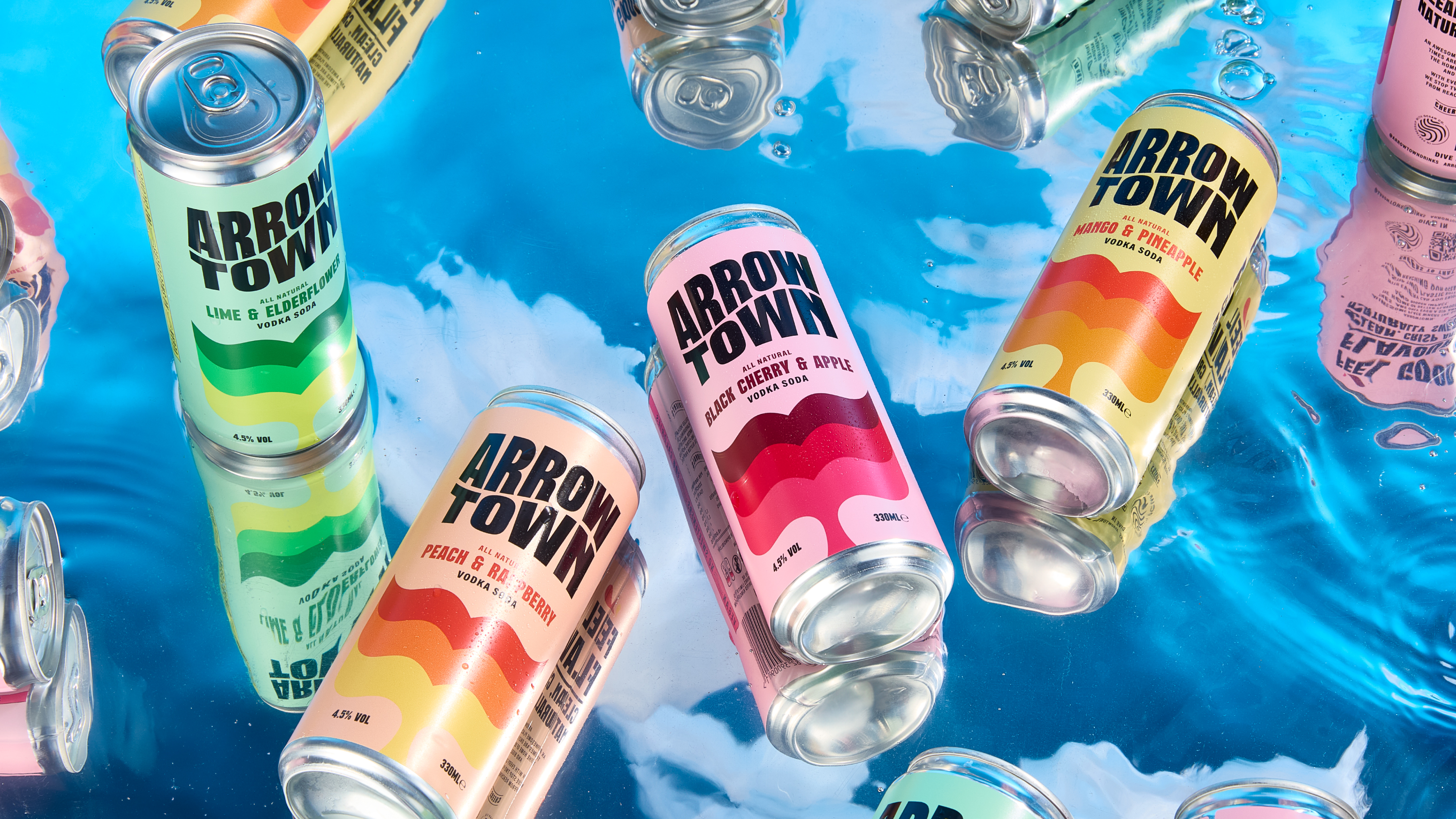
Think about what the retailer is looking for. "They want brands that can come in and push through pricing," explained Smith.
He also saw room left by the big spirits houses, which tend to use RTDs "as a vehicle generally to push their bottled spirits" and so tend to play it safe.
The insight: a price point is a position on the shelf. Arrowtown sits in the gap between two neighbours and gives drinkers of both a reason to move, while giving the retailer a lift in category value.
Learn the sales cycle before you plan around it
Maddocks’ most candid moment was about luxury on-trade. He assumed a great product would win a great venue. It doesn't, at least not straight away.
He confessed: "we didn't realise the way that the luxury on-trade works in terms of commercials and that we couldn’t just sell into an account. They have 12-month or two-year deal cycles. We were talking to potential customers and they said ‘oh great, we really like the product, but our contracts don't run out for another year’."
The early conversations paid off though as contracts ended. Ham Yard Hotel gave HAMA their first cocktail slot which was a huge milestone for them. Then came the house pour status with Sushisamba, which really helped build how other venues saw the brand.
"That was amazing for us from a brand-building perspective,” explained Maddocks.
The insight: in luxury on-trade, the sale happens when the contract ends, not when the buyer says yes. Keep the conversation warm for a year, and land one marquee account that does the persuading for you.
Start where it sells, then work back from where you want to be
An audience question about on-trade versus off-trade drew out how improvised both starts were. For both brands, neither of their first channel successes were on the plan.
"We were at our parents' house in the middle of COVID. Our first sales were literally posted on Facebook community groups. We spent a month driving around, just delivering them in our parents' car, and sold like 5,000 cans in the first month," said Smith.
"Literally our first pallet delivery, and we're selling it to just local pubs, and it was by no means where we had it on the mood board at the start. We had zero network in London initially," said Maddocks.
Smith described the next phase as deliberate experimentation: "Especially when you're new to the industry, I think you do need to throw mud at the wall to see what sticks."
Festivals and on-trade built awareness, awareness built credibility with independents, and that led to a first Co-op listing, and then another. Then Sainsbury's and Morrisons.
Now the brothers plan the other way round: "One thing we talk about internally is reverse engineering. If you want to get to where you want to be in five years, we know retail is going to be the thing, and we need to be proving that we can sell in Sainsbury's and Morrisons," explained Smith.
Maddocks is narrowing HAMA's focus too: the top tier of hospitality, Waitrose and premium retail. He sees the on-trade as rum's built-in advantage: "What we have in rum, which we're fortunate for, is a strong underlying volume and serves which are already in demand. We don't have to do all of the serve education piece, because these are cocktails people already know. It's educating consumers as to why HAMA elevates these, and the wider serve potential."
The insight: early channels are for learning who buys and why. Once the destination is clear, plan backwards from where you want to go and prove the rate of sale where it counts.
Say no to the next flavour
HAMA launched with three products and has resisted adding more. Signature carries the brand's argument; the flavours give newcomers a way in.
"It is always tempting to launch new flavour extensions, but what we don't want to do is confuse consumers as to what our core proposition is. Signature is our most versatile rum, being additive free and crafted to elevate the classic white rum serves. It has been growing quickly in the on-trade, whilst our Madagascan Vanilla and Berry rums give us wider serve potential and unique flavour profiles. Our line up caters to multiple occasions and serves,” explained Maddocks.
Arrowtown settled on a core range after its 2024 rebrand and is focused on distribution for those lines, which it says have added around 2,000 points of distribution in three months.
Smith described the tension honestly: "There's definitely a balance between putting a lot of time into your messaging, but also being excited and bringing innovative things to market."
He hinted at new formats in development, adding: "I won't disclose too much."
The insight: every new line splits budget, shelf and story. Both founders are holding the range until the core is understood and selling.
Hire late and buy help in pieces
Both teams are still small: HAMA has three founders, two consultants and specialist agencies; Arrowtown has seven or eight people including part-timers. Both learned from hires that came too early or didn't fit.
Arrowtown made its first full-time hire last August. Smith's priority is distribution before spending on marketing.
"Keep it simple, get more shelves, build volume and then if you want to market, you've actually got some amount of distribution to back that up," explained Smith.
He also highlighted the value of having the right skill set and people skills across the team, particularly when it is small is a real advantage.
"Just having people that you can trust to get on and do the job and know when things are coming in has been great," Smith said.
The insight: a hire needs a clear job to do. Until you know your customers and your sales cycle, buy capability in pieces and keep the core team to people who can run without supervision.
Borrow from other categories and the US, but don't copy
Both founders look outside their own lane for ideas. HAMA benchmarks against tequila, gin and vodka, because rum hasn't had the same marketing focus.
Maddocks said: "We don't really look at rum as a category when we're coming up with marketing campaigns or activation ideas. We're trying to look at other categories which have really done it well recently, and then figure out how we put our spin on that."
Asked which brands he envies, Maddocks named two tequilas, Lalo and Clase Azul, admiring the latter for looking established from day one.
"They look like a brand that's been there for the same amount of time as a lot of the legacy whisky brands," said Maddocks .
On saturated categories, the US energy brand Bloom came up as a model for not over-educating consumers:
The US is a source of ideas for both, but they were wary of reading too much into it. Smith described a craze for sports-drink style vodka RTDs:
"It's basically like Gatorade with vodka. And some of these brands sold like 12 million cans in four months. You have to take things with a pinch of salt and realise they're different beasts, and those numbers can easily warp your brain quite quickly," said Smith.
Maddocks agreed that the US is a different animal. "A lot of the things that seem to be working there, I don't necessarily think would have worked here, and vice versa. We look at it a lot, but not to necessarily try and copy it," explained Maddox.
The insight: the most useful benchmarks are often outside your category or market. The discipline is in translating them, not transplanting them.
What it adds up to
Both brands followed the same sequence in very different categories. Selfridges led to Waitrose. Facebook groups led to farm shops, festivals and then Sainsbury's. Each step was a buyer who could say yes and that turned into evidence for a bigger one.
The second thread is restraint and the importance of keeping things tight. Few products, few hires. Both are spending effort on proof rather than reach.
Young Leaders is Fero's quarterly evening for people building careers and businesses in drinks, held at our space in Carnaby. This was our final edition of 2026. Sign-up to our newsletter to stay update to date with our next event and other news from Fero here.
